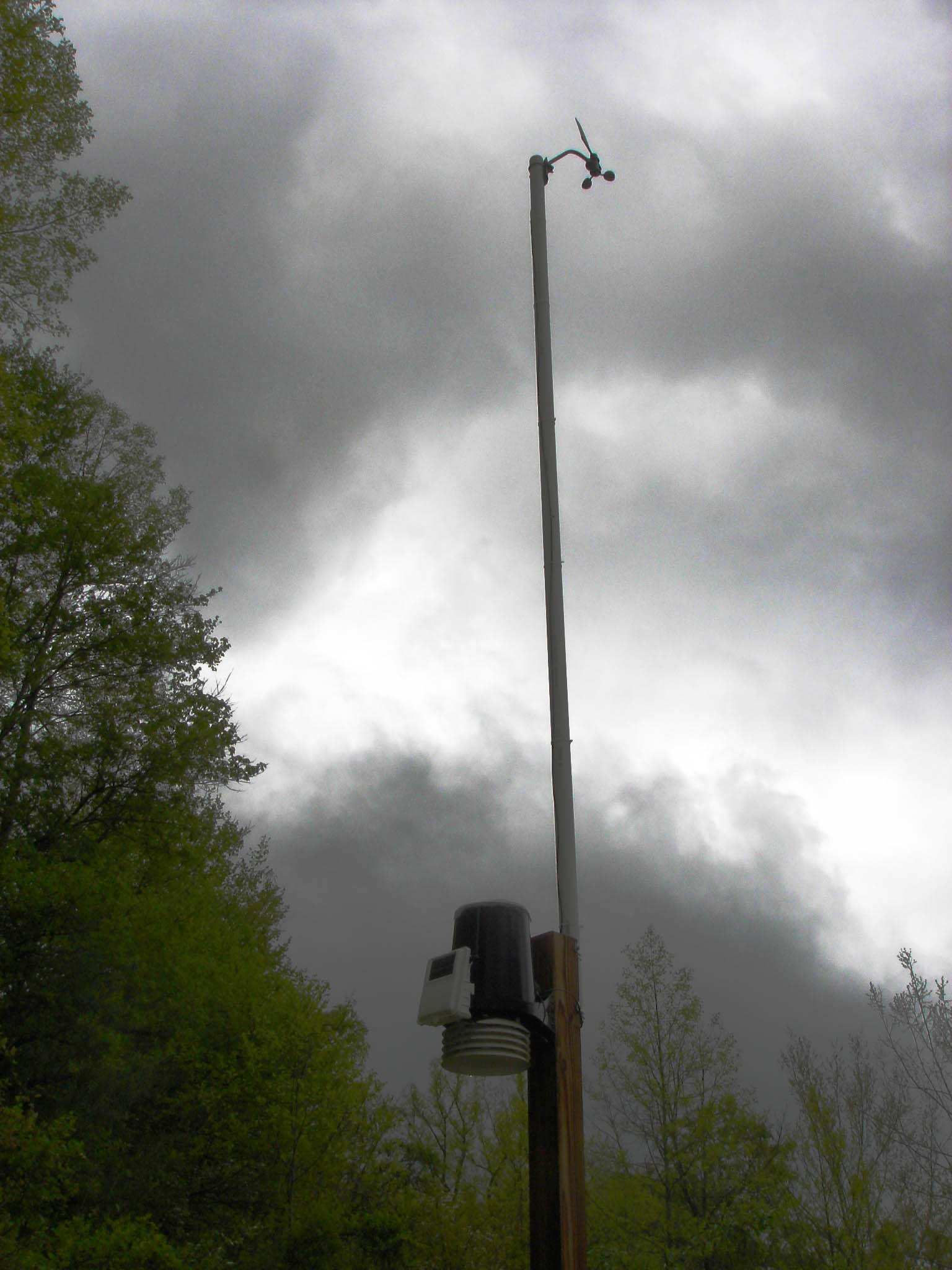



Updated: 5:29pm on 5/19/12
| |||||
|
(location) |
|||||
|
|||||
|
|||||||||||||||||||||||||||||||||||||
| 2 Day Outlook |
|
| Sat | Normal's | High 84 | 75 |
| Low 54 | 51 | Clear | High Wind Today- 6 mph at (1:28pm) |
| Sun | High 84 |
| Low 57 | Clear |
|
|
|
| Historical Data |
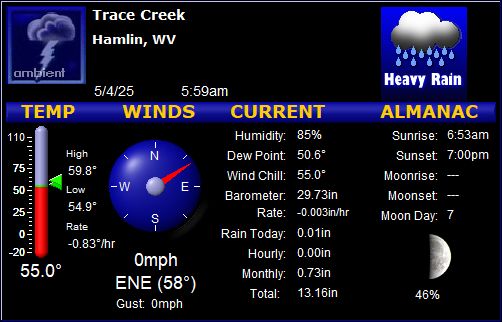
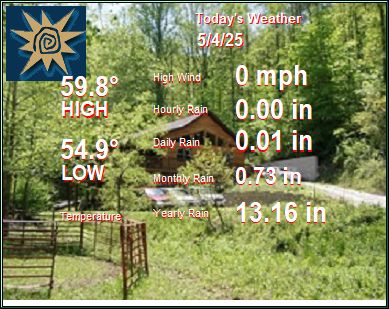
| Daily High 83.0 on 1:21pm |
| Daily Low 53.4 on 6:33am |
| 24 Hours Ago 79.2 |
| Difference -0.5 |
| Todays Avg. 66.4 |
| 000 |
| Yesterday's High 82.3 at 3:47pm |
| Yesterday's Low 46.4 at 6:17am |
| Monthly High 87.4 on 5/3/12 |
| Monthly Low 36.5 on 5/11/12 |
| 000 |
| Monthly Avg. 64.4 |
| Yearly Avg. 48.1 |
| 000 |
| 2011 Records |
| High 87.4 5/3/12 |
| Low 13.9 2/13/12 |
|
|
|
|
||||||||||||||
![]() |
Major Marine Tours
|
| WV Advisory | ||
Charleston Area:
No Warnings |
||
Canaan Valley:
No Warnings |
||
| Pope Valley CA Advisory | ||
No Warnings |
||
| Ocracoke Island | ||
Warning Description: Beach Hazard Statement
Warning Date: 3:50 PM EDT on May 19, 2012
WarningSum:...Beach Hazards Statement Remains In Effect Until 8 Pm Edt This
Evening From Cape Lookout North...
Warning Message:* hazards...high rip current risk and dangerous breaking waves.
* Timing...the most likely time for life threatening rip currents
will be a couple of hours either side of low tide. Low tide will
occurred around 1 PM EDT this afternoon.
* Location...along the beaches from Cape Lookout north to
Hatteras Inlet.
* Potential impacts...dangerous rip currents combined with shore
break waves between 5 to 7 feet.
Precautionary/preparedness actions...
Rip currents are powerful channels of water flowing quickly away
from shore...which occur most often at low spots or breaks in The
Sandbar and in the vicinity of structures such as groins...
jetties and piers. Heed the advice of lifeguards and the beach
patrol. Pay attention to flags and posted signs posted near beach
access points and lifeguard stations.
If you become caught in a rip current...do not panic. Remain calm
and begin to swim parallel to shore. Once you are away from the
force of the rip current...begin to swim back to the beach. Do
not attempt to swim directly against a rip current...since it can
exhaust and even kill the strongest swimmer.
Shore break occurs when waves break directly on the beach. The
most common injuries with strong shore break are neck and back
injuries...which most often occur when the powerful surf throws a
swimmer or surfer head first into the bottom. It is extremely
important to protect your head and neck whenever you are in
breaking waves by keeping your hands in front of you at all
times.
Please visit the following website to share your thoughts on the
new beach hazards statement...
Http://www.Weather.Gov/survey/NWS-survey.Php?Code=chmbhs
|
||
| NYC/NJ Metro Advisory | ||
No Warnings |